Sensitive files get flagged to the person who owns them
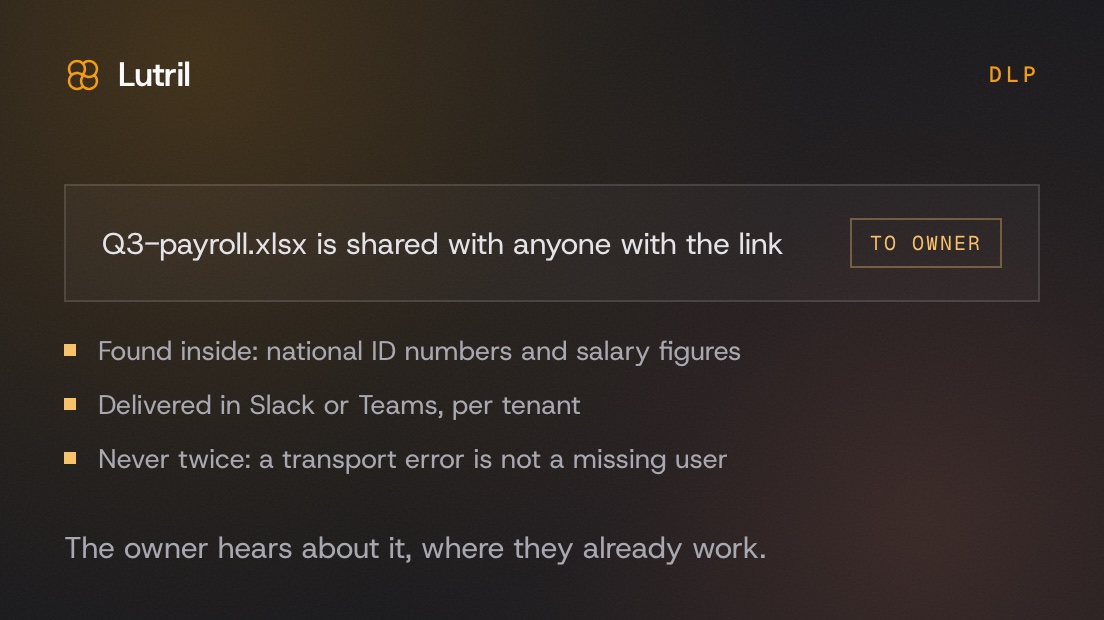
A sensitive document shared too widely is usually not a policy failure, it is somebody who did not realise. The useful intervention is telling the person who owns the file, quickly, rather than adding a row to a report a security team reads next quarter.
Files are classified and the owner is notified in chat, with the file and what was found in it. Where that notice goes is a property of your tenant, not of the storage provider. An earlier version hardcoded Drive to Slack and SharePoint to Teams, which quietly assumed every company runs both and routes somebody's SharePoint finding to a Teams account they may not have.
A fallback platform is only tried when the primary reports that the recipient does not exist there, never when the primary simply failed. The difference matters during an outage: retrying a transport error on a second platform would notify everybody twice.